
April 2025

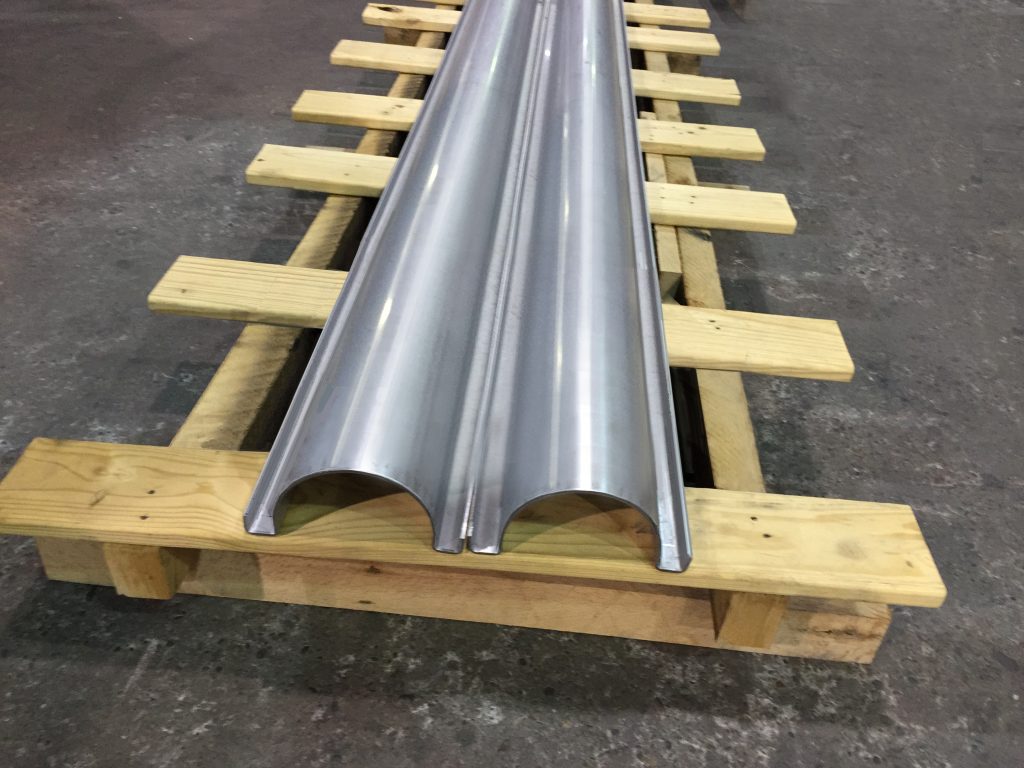
roll forming

Sheet Metal Bending vs. Roll Forming: What’s the Right Process for Your Project?

Selecting the right sheet metal forming process is essential for ensuring optimal efficiency, quality, and cost-effectiveness of your fabricated parts. Two commonly used methods in metal fabrication are sheet metal bending and roll forming. While both processes shape metal into the desired form, they have key differences that determine their suitability for various applications. Let’s dive into these differences and determine which service is most compatible with your next project.

Roll Forming for Efficient Results

Roll forming is a continuous bending operation in which a long strip of metal is passed through a series of rolls to gradually achieve a desired shape. This process is ideal for producing parts with consistent cross-sections, such as cylinders, cones, and rings.

Benefits of Roll Forming

  • Efficiency: Roll forming is a fast process that minimizes labor and reduces production time. 
  • Smooth finish: Because the metal is continuously shaped, roll forming produces a uniform appearance without visible break lines. 
  • Cost-effective for large runs: Once set up, roll forming can process large quantities of parts with minimal material waste, making it ideal for high-volume production. 

When to Choose Roll Forming

This is the preferred method when:

  • The part requires a consistent radius and smooth aesthetic. 
  • The metal is long enough to span across the forming rolls. 
  • The goal is to optimize efficiency and reduce labor costs.

Sheet Metal Bending: A Flexible, Cost-Effective Alternative 

Sheet metal bending, often performed using a press brake, involves clamping the metal and applying force to bend it into the desired shape. One specific technique within this method is bump forming, where segmented curves are created using a series of small bends.

Benefits of Sheet Metal Bending

  • Flexibility in design: This process allows for forming complex geometries like square-to-round transitions.
  • Ideal for shorter parts: Sheet metal bending can be used when a part is too short to be effectively roll-formed. 
  • Customizable radius: Bump forming can achieve various radii by adjusting the number of bends. 

When to Choose Sheet Metal Bending 

Sheet metal bending is typically the best option when: 

  • The part is too short to span across the rolls in a roll forming machine. 
  • A square-to-round transition or other complex shape is required.
  • The customer does not require a perfectly smooth finish and is seeking a cost-saving alternative to rolling. 

One recent customer of ours opted for sheet metal bending for the production of deer feeders. Initially, the feeders were roll-formed into two half pieces. However, the customer planned to cover them with rubber bark, eliminating the need for a perfectly smooth finish. Because cost-effectiveness was a priority for this customer, MFP recommended bump forming instead, using a press brake to create a segmented curve. This approach reduced production costs without affecting the products’ functionality. 

Comparing Roll Forming and Sheet Metal Bending

Here’s a simple side-by-side comparison to help guide your decision:

sheet metal bending

MFP’s Expertise in Metal Forming Services

At Metal Fabrication Professionals, we have the expertise and equipment to determine the best forming process for your project. We’re well-versed in precision sheet metal fabrication and ready to tailor our approach to meet your exact needs.

Why MFP? 

  • State-of-the-art equipment: Our facility has specialized machines for not only roll forming and sheet metal bending, but also a range of additional machining services—all to deliver precisely what you require. 
  • Experienced team: Our experts understand when to use each method for optimal results.
  • Customer-first approach: We help customers balance quality, cost, and production time to meet their goals

Trust the professionals at MFP to handle all your machining and fabrication needs. Request a quote today!

Sheet Metal Bending vs. Roll Forming: What’s the Right Process for Your Project? Read More »
metal fabrication materials

Choosing the Right Metal Fabrication Materials for Your Project: Advice from MFP

Selecting the right metal fabrication materials is crucial for ensuring durability, cost-effectiveness, and peak performance in your finished products. At Metal Fabrication Professionals, we work with a variety of materials to meet different needs.

Two of the most common materials we handle in our Louisville metal fabrication shop are mild steel and stainless steel. Each has unique properties that make it ideal for specific projects. Let’s dive into these distinctions to determine which metal fabrication materials are right for your next project.

Mild Steel: A Versatile Choice for General Fabrication 

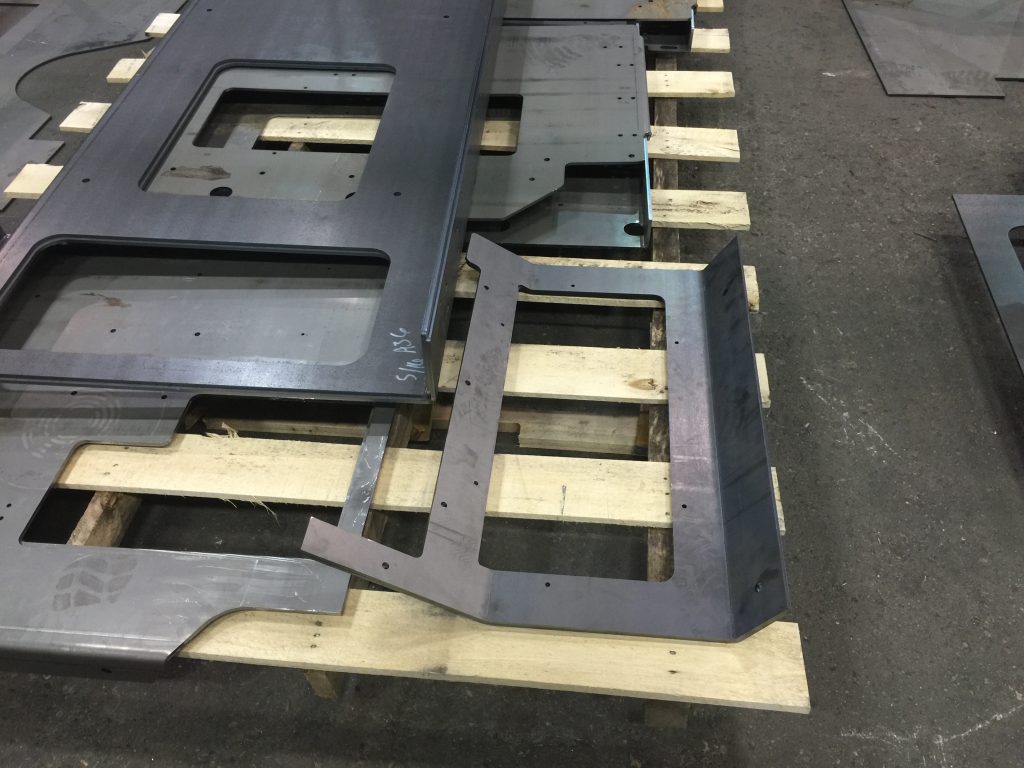
Mild steel serves as a go-to, catch-all material for many general fabrication needs. Due to its desirable properties, A36 mild steel is one of the most commonly requested and widely used materials in our metal fabrication shop.

Properties and Benefits of Mild Steel

  • Excellent machinability and weldability: A36 is considered to be a low-carbon steel, a category of materials that have less than 0.3% carbon by weight. Its low carbon content means this material can be easily formed, machined, and welded.
  • Heat resistance: In addition to its machinability, low carbon steels like A36 mild steel maintain structural integrity even when exposed to moderate temperatures.
  • Cost-effectiveness: Mild steel is one of the most budget-friendly options available for our welding and fabrication services. 
  • Wide availability: At MFP, we stock mild steel from 22 gauge up to 3 ½” in thickness.

Considerations for Mild Steel Fabrication

One downside of low-carbon materials like A36 mild steel is that it will rust when left untreated. To combat this, we offer several metal finishing options:

  • Metal blasting and painting, a common solution to prevent rust and enhance aesthetics
  • Galvanization or clear sealers, which add an extra layer of corrosion resistance
  • Powder coating, handled by our trusted vendors to ensure the highest quality finish

Overall, mild steel is an excellent choice for applications where cost-effectiveness and easy fabrication are priorities. However, if the part’s end application requires corrosion resistance, stainless steel may be a better option.

Stainless Steel: Corrosion Resistance and Durability

For applications requiring durability and resistance to corrosion, stainless steel is an excellent choice. At MFP, we stock large quantities of 304L and 316L stainless steel, ranging from 16 gauge to ¾” in thickness.

Why Choose Stainless Steel?

  • High heat resistance: Even standard grades of stainless steel can withstand higher temperatures than mild steel, making them suitable for parts that are exposed to heat.
  • Aesthetic and finishing options: Stainless steel can be polished to a mirror finish, bead blasted for uniformity, or selectively ground to meet specific design needs.
  • Superior corrosion resistance: Stainless steel contains chromium. When exposed to oxygen, chromium forms a thin, invisible layer of chromium oxide on the surface of the metal, which acts as a protective barrier against moisture and other corrosive elements. Unlike mild steel, which can rust when exposed to moisture and air, stainless steel’s chromium oxide layer self-repairs if damaged, making this material ideal for applications in harsh environments. 

Ideal Applications for Stainless Steel

  • Food-grade equipment: Due to its easy-to-clean properties, stainless steel is commonly used in the food and beverage industry. 
  • Outdoor use: The material’s corrosion resistance makes it ideal for outdoor applications, where it may be exposed to the elements.

Considerations for Stainless Steel Fabrication 

When fabricating stainless steel, it’s important to use the right cutting process. MFP’s laser cutting services provide precise cuts without excessive heat input, which helps maintain the material’s integrity. Plasma cutting, on the other hand, is not ideal for thicker stainless steel due to its high-heat process.

How Our On-Hand Inventory Benefits You

At MFP, we prioritize efficiency by maintaining a large on-hand steel inventory. This benefits our customers in several ways:

  • Shorter lead times: With no need to wait for material orders, we can begin producing parts immediately. We even offer expedited lead times on steel parts.
  • Consistent availability: Our inventory includes common and specialty materials, ensuring we can meet a wide range of fabrication needs. 
  • Material expertise: Our team has extensive experience working with various steel grades, guaranteeing the best possible results every time.

Partner with a Trusted Metal Fabrication Shop 

No matter your choice of metal fabrication materials, Metal Fabrication Professionals has the expertise and resources to deliver top-notch results. Our Kentucky metal fabrication facilities are equipped with state-of-the-art equipment, so we can handle projects of all sizes.

Need expert guidance on choosing the right metal fabrication materials? Contact us today to discuss your needs!

Choosing the Right Metal Fabrication Materials for Your Project: Advice from MFP Read More »

Scroll to Top